
Late winter, seed packets on the kitchen table, and a patch of lawn that has started to look like a waste. What goes there — a run of timber raised beds, or a plot dug straight into the soil? Both work. The sensible answer depends on your soil, your budget, your back, and how much time you actually have on a Saturday morning.
Here's how the two compare on the things that matter across a British growing season.
Drainage and soil: where each one wins
On heavy clay — the sort that holds a puddle for three days after rain and sets like brick in August — raised beds are close to a cure. Filling a bed with a loam-based mix lifts roots above the worst of the winter water, and you control what the plants grow in from day one.
On thin, sandy or chalky ground the argument flips. Raised beds drain fast, which is welcome in February and a nuisance in July. You water more often, nutrients leach away quicker, and an annual mulch of compost stops being optional.
In-ground plots have one big advantage: depth. There is no bottom to them. Roots travel as far as conditions allow, moisture sits lower in the profile, and soil temperature moves more slowly through a hot spell. A dug plot also gives you somewhere to grow the long-term crops that dislike being moved.
Whatever you build, don't line the base with solid plastic — water needs somewhere to go. Cardboard is enough to smother grass while letting worms and roots through. Depth matters more than most people expect:
- 15–20cm: salad leaves, radishes, herbs, spring onions
- 25–30cm: most vegetables, including beans, chard, beetroot and brassicas
- 40cm or more: long carrots, parsnips and maincrop potatoes
Weeds, slugs and the weekly workload
Raised beds usually start clean. Fill them with bought compost or well-rotted manure and you leave behind the seed bank of annual weeds that lurks in a neglected plot — the chickweed, groundsel and bittercress that appear the moment you turn your back.
What a timber edge won't stop is the perennials. Bindweed, ground elder and horsetail will happily run underneath and come up through the middle. If your garden has any of those, deal with them before you build, or you'll spend the next five years pulling them out of expensive compost.
Slugs are the other thing to plan for. Damp compost against warm timber is prime slug habitat, and a bed of young lettuce can vanish in a fortnight. Night patrols with a torch, a nematode drench in spring, and a pond or log pile to bring in frogs and hedgehogs all help.
An in-ground plot needs more hoeing, but a long straight row is quick to hoe on a dry morning. A raised bed packed with mixed crops is fiddlier work, because you can't get the right angle on the blade.
Accessibility and comfort
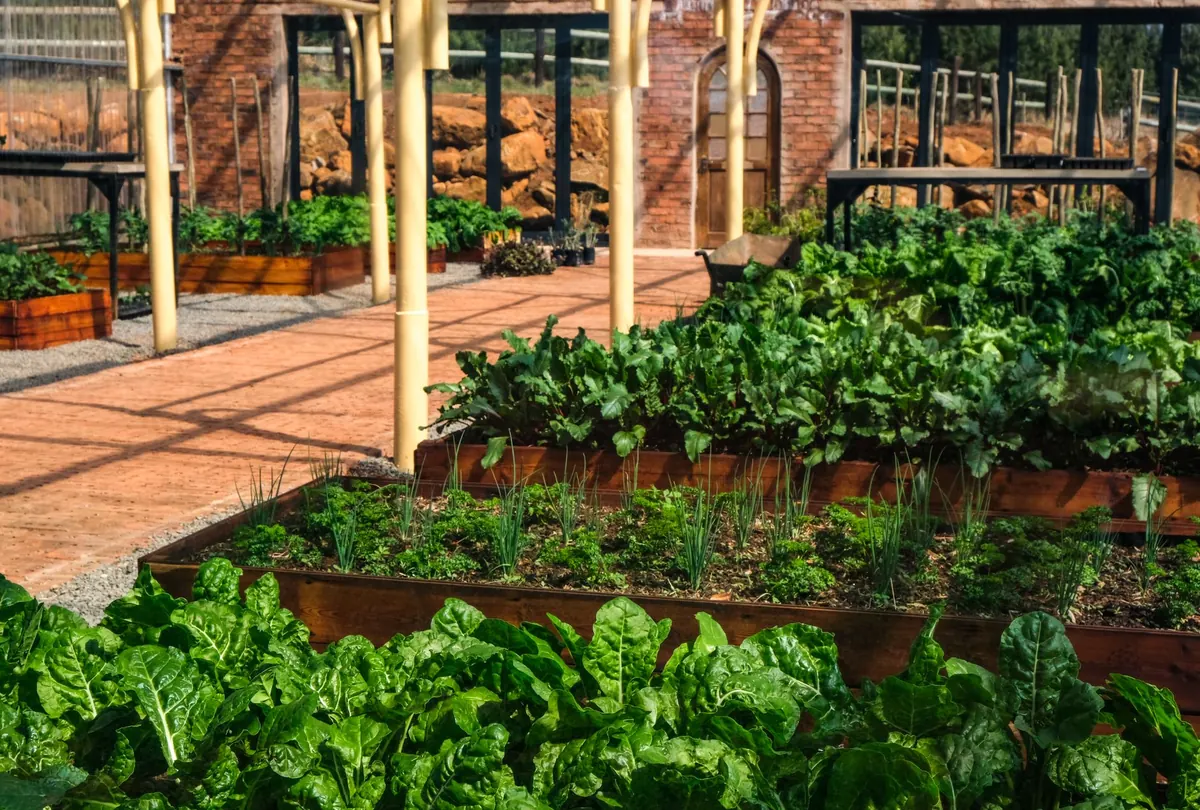
A bed built to 60–75cm means you can sit on the edge or work from a stool rather than kneeling in the wet. Beds on legs, filled to waist height, suit anyone who can't bend for long. For wheelchair users, you want clear space underneath, a firm path at least 90cm wide, and a bed you can reach across without leaning.
Reach rule of thumb: keep beds around 120cm wide if you can walk round both sides, and 60cm if you can only get at them from one. Any wider and you'll be stepping into the bed to plant it, compacting the soil you have just paid for.
If an in-ground plot is your only option, a kneeler with handles, a few long-handled tools and a plank to kneel on make a real difference. Open ground is also less thirsty in a dry summer, which matters if filling and carrying a watering can is a struggle.
Cost, materials and the filling problem
In-ground growing is cheap to start: a spade, a fork, a bag of blood, fish and bone, and a packet of seeds. The cost arrives later, in years of working compost into clay or barrowing manure onto sand.
Raised beds cost money up front, and the timber is rarely the expensive part. The compost to fill them is. A surprising volume disappears into a new bed, and buying it in bags will make your eyes water. Order a loose load from a local supplier if you can, and use what you already have:
- Strip turf and lay it upside down at the base of the bed.
- Add subsoil, or soil lifted from paths and old borders, through the middle.
- Save the best compost for the top 15cm, where seeds and roots actually live.
- Top up with a mulch of well-rotted manure or compost each autumn.
A few material notes. Avoid old railway sleepers that may have been treated with creosote, and be wary of any reclaimed timber you can't identify. Untreated oak, larch and Douglas fir last well but not indefinitely; pressure-treated timber, recycled plastic boards and galvanised steel are the long-lived choices. Brick or stone edges work nicely too, as long as they don't shade the bed.
Does one grow better crops?
Most vegetables are indifferent. Give them light, water and decent soil and they won't care whether there's a timber frame around them. The differences sit at the margins.
Raised beds warm up sooner in spring, sitting above cold ground with better drainage. In a northern garden or a chilly corner, that can mean earlier salads and carrots, and a longer season for tomatoes, peppers and courgettes.
Open ground holds moisture better in dry spells and gives deep-rooted crops room to stretch. Parsnips, long carrots, maincrop potatoes, asparagus and rhubarb all do better with real depth and a steady water supply. Tall crops such as Brussels sprouts and sweetcorn anchor better in open soil, and catch less wind than they would on an exposed raised bed.
Raised beds do make rotation and soil replacement easier. If clubroot or onion white rot gets into a bed, you can empty it, refill with clean material and start again — a much grimmer prospect in open ground, where you simply live with it.
The middle ground
Before you commit to either, consider the no-dig bed: marked out at ground level, fed from the top with compost and mulched every autumn, with paths between. You get the weed suppression and easy planting of a raised bed without the timber or the filling bill. It's the cheapest way to find out whether you actually enjoy growing vegetables.
Many gardens end up with both. Raised beds near the house for salad, herbs and a few tomatoes; a dug patch at the bottom for potatoes, courgettes and a row of parsnips.
Making the decision
Work through these questions honestly, and the answer usually becomes obvious:
- Is your soil waterlogged in winter, or shallow over chalk? Raised beds.
- Light, sandy and dry in summer? In-ground, with plenty of organic matter dug in.
- Do you struggle to bend or kneel? Raised beds, at the height that suits you.
- Small budget and a big plot? In-ground, or no-dig beds.
- Determined to grow parsnips, long carrots, spuds and rhubarb? Keep some open ground.
- Want a tidy, easy-to-weed patch by the back door? Raised beds.
Start smaller than you think you should. Two beds, or a plot of roughly 3m by 3m, is plenty for a first season and far more likely to be kept watered, weeded and picked. You can always build more next year, once you know what you actually eat.
The best vegetable plot isn't the tidiest one. It's the one you can reach with a watering can in under a minute, on a Tuesday evening, without groaning.
Photo: Magda Ehlers / Pexels